
Discovering bat droppings in your attic is a sign that bats may have been using the space as a roost. While removing the bats is the first priority, cleaning up the accumulated guano is also an important part of restoring the attic and protecting your home.
Bat guano cleanup should be handled carefully, especially when there is a large accumulation of droppings. Simply sweeping or vacuuming dry material can spread contaminated dust through the air.
If you have found bat droppings in your Michigan home, the right approach is to identify the bat entry points, safely remove the bats, clean the affected areas, and prevent the bats from returning.
What Is Bat Guano?
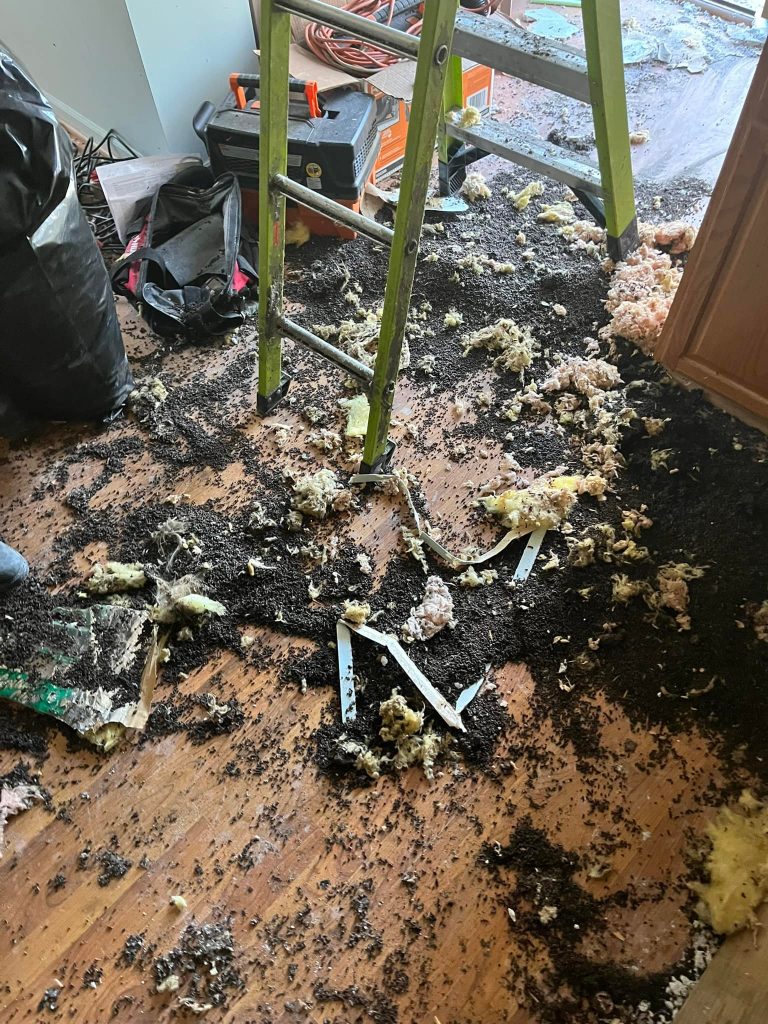
Bat guano is the term commonly used for bat droppings. When bats repeatedly use an attic, crawlspace, chimney, or another enclosed area as a roost, droppings can accumulate over time.
A small amount of guano may not look like a serious problem, but larger accumulations can create unpleasant odors, stain insulation and surfaces, and make attic restoration more difficult.
The amount of guano can also provide clues about how long bats have been using the area.
Why Is Bat Guano Cleanup Important?
Bat droppings should not simply be left in an attic after a bat infestation has been resolved.
Accumulated guano can:
- Create strong odors
- Contaminate insulation and other materials
- Attract insects
- Leave stains on attic surfaces
- Contribute to poor attic conditions
- Create dusty conditions when disturbed
- Make future attic restoration more difficult
The CDC notes that large accumulations of bird or bat droppings should be cleaned by professionals experienced in handling these materials.
That is why professional bat guano cleanup should be considered when there is significant accumulation or contamination.
Signs Your Attic May Need Bat Guano Cleanup
You may need professional cleanup if you notice:
- Bat droppings around attic insulation
- A strong ammonia-like or musty odor
- Dark stains beneath suspected roosting areas
- Large amounts of droppings on insulation
- Bat activity around the attic
- Guano near roof or wall entry points
- Damaged or contaminated insulation
- Repeated bat activity in the same area
If you are seeing these signs, cleaning the droppings without addressing the bat entry points will not solve the underlying problem.
Why Bat Removal Should Come Before Cleanup
One of the most important steps is making sure the bats are no longer using the attic before completing restoration.
If the entry point remains open, new bats can continue entering the same space and create another buildup of guano.
Professional live bat exclusion focuses on allowing bats to leave while preventing them from getting back inside. This is different from simply trapping or removing individual bats.
Michigan’s Bat Expert provides live bat exclusion services designed to address the underlying access points and help prevent bats from returning.
Can You Clean Bat Droppings Yourself?
Small amounts of droppings may appear easy to clean, but larger accumulations require additional care.
Dry sweeping or ordinary vacuuming can disturb contaminated material and create airborne dust. This is one reason professional cleanup is recommended for significant accumulations.
If you discover a large amount of guano in your attic, avoid disturbing it unnecessarily and have the area assessed by a qualified professional.

What Happens During Professional Bat Guano Cleanup?
The exact cleanup process depends on the condition of the attic and the amount of contamination.
A professional assessment may include:
1. Inspecting the Attic
The attic is inspected for guano accumulation, contaminated materials, odors, and areas where bats have been roosting.
2. Identifying Bat Entry Points
Professionals look around areas such as rooflines, soffits, vents, gaps, and other potential access points.
3. Completing Bat Exclusion
The bats need to be safely excluded before permanent repairs and cleanup are completed.
4. Removing Contaminated Material
Depending on the condition of the attic, heavily contaminated insulation or other materials may need to be removed.
5. Cleaning the Affected Areas
Accumulated guano and contaminated debris are carefully removed from affected surfaces.
6. Restoring the Attic
If insulation or other attic materials have been damaged or contaminated, restoration may be necessary after the bat problem has been resolved.
Michigan’s Bat Expert also provides attic restoration services for homeowners dealing with damage caused by wildlife activity.
Can Bat Guano Cause Health Concerns?
Bat and bird droppings can contain organisms that may create health concerns when contaminated material is disturbed.
One concern associated with environments contaminated by bat or bird droppings is histoplasmosis, a fungal infection caused by inhaling Histoplasma spores.
This does not mean that every attic containing bat guano will cause illness. However, large accumulations should be treated carefully, particularly when the material is dry and dusty.
If your attic contains a significant amount of bat guano, professional assessment and cleanup can reduce unnecessary exposure to contaminated material.
How to Prevent Bat Guano From Building Up Again
The best way to prevent another buildup is to address the reason bats entered the property in the first place.
Prevention may involve:
- Identifying potential entry points
- Completing proper bat exclusion
- Sealing openings after bats have safely left
- Inspecting rooflines and soffits
- Checking attic vents and other openings
- Repairing damaged areas
- Monitoring the attic after exclusion
Michigan bats can enter surprisingly small openings, so simply closing an obvious hole may not always be enough.
A complete inspection can help identify the access points that need attention.

What If You Still Hear Bats After Cleanup?
If you hear scratching, squeaking, or movement in the attic after cleanup, there may still be an active bat entry point.
Do not assume that cleaning the attic has solved the problem.
The bats may still be accessing the structure through another opening, or an exclusion may not have been completed correctly.
In this situation, the attic should be inspected again to determine where the bats are getting inside.
Bat Guano Cleanup and Attic Restoration in Michigan
Bat infestations can affect more than just the animals themselves. Long-term roosting can leave behind droppings, odors, contaminated insulation, and other attic problems.
That is why a complete solution should address both bat removal and the condition of the attic afterward.
Michigan’s Bat Expert offers wildlife and bat removal services throughout its Michigan service areas, including professional wildlife control services and attic restoration.
The goal is not simply to remove a bat. It is to address the source of the problem and help protect the home from future wildlife intrusion.
When Should You Call a Bat Removal Professional?
Contact a professional if:
- You repeatedly hear bats in your attic
- You find significant amounts of bat guano
- Bats are entering through the roof or soffits
- You notice strong odors coming from the attic
- You find bats entering your living space
- You suspect bats have been living in the attic for an extended period
- You need attic cleanup after bat exclusion
Trying to solve a recurring bat problem without finding the actual entry points can result in the problem returning.
Professional Bat Guano Cleanup in Michigan
If you have discovered bat droppings in your attic, do not ignore the problem. The longer bats use the same area, the more guano and contamination can accumulate.
The right solution starts with identifying the source of the bat activity, safely excluding the bats, and then addressing the affected attic space.
For professional help with bat removal, exclusion, guano cleanup, and attic restoration, contact Michigan’s Bat Expert to request an assessment.
A properly handled bat infestation can help protect your attic, reduce recurring wildlife problems, and give you peace of mind that the source of the problem has been addressed.
Frequently Asked Questions
How do I know if I have bat guano in my attic?
Bat guano is usually found below areas where bats are roosting. You may also notice a strong odor, staining, or repeated bat activity around the attic.
Is bat guano dangerous?
Large accumulations of bat or bird droppings can create health concerns when contaminated material becomes airborne. Significant accumulations should be handled carefully and may require professional cleanup.
Should I clean bat guano before removing the bats?
No. The bat activity and entry points should be addressed first. Otherwise, bats may continue entering the attic and create another accumulation.
Can bat guano damage attic insulation?
Yes. Significant accumulation can contaminate insulation and may contribute to odors and other attic problems. Depending on the condition, contaminated insulation may need to be removed and replaced.
How can I stop bats from coming back?
Professional bat exclusion identifies and addresses entry points while allowing bats to leave safely. Once the bats are out, openings can be permanently sealed to help prevent re-entry.
Does Michigan’s Bat Expert provide attic restoration?
Yes. Michigan’s Bat Expert provides attic restoration services as part of its wildlife and bat-related services.
Get Professional Help With Bat Guano Cleanup
Found bat droppings in your attic? Don’t wait until the problem gets worse.
Request a quote from Michigan’s Bat Expert for professional bat removal, exclusion, cleanup, and attic restoration services in Michigan.

Sam Sullivan is the owner and lead expert at Michigan’s Bat Expert, specializing in humane bat removal and exclusion services based in Oakland County, Michigan. With years of hands-on experience in wildlife control, Sam has helped countless homeowners and businesses protect their properties from bat and wildlife infestations while adhering to Michigan’s strict wildlife laws.
His expertise lies in exclusion and prevention, ensuring that bats and wildlife are removed safely and never return. Sam is dedicated to ethical and effective solutions, using proven methods that prioritize both property protection and wildlife conservation. His commitment to excellence has made Michigan’s Bat Expert a trusted name in the industry.